

Companies understand the value of becoming customer-centric, but the transformation is challenging.
In our engagements with Fortune 1000 companies, we have been asked many times, “How do you build a customer-centric culture of innovation in a company that historically has been idea or technology driven?”
In this article, I offer guidance for doing just that. Our approach, which is based on 30+ years of experience and has a track record of success, is proven to deliver the greatest impact in the shortest time.
The Importance of Customer-Centricity
In customer-centric companies, managers and employees across the organization make sure all their business decisions support the creation of customer value. This is made possible when they:
- Know what unique customer insights are needed to drive customer-centric decision making
- Are able to obtain the needed customer insights
- Know when and how to use the insights to make business decisions that are focused on value creation
Unfortunately, at too many companies, this behavior is not the norm. Important decisions are often made without key customer-centric knowledge.
For example, a company can launch a product without even agreeing on:
- Who the customer is
- What the definition of a customer need is
- What the company’s customer needs are
- Which customer needs are unmet
In most companies, these questions are highly debated and often go unanswered.
As a result, when it comes to new product innovation, managers struggle to filter and evaluate ideas, and over 90 percent of development efforts fail.
Building Customer-Centric Competency
Becoming a customer-centric organization is not easy, but there is no reason to make it harder than it needs to be. The goal is not to make all your employees experts at collecting the right customer data. Rather, the goal is to make them experts at using the right customer data.
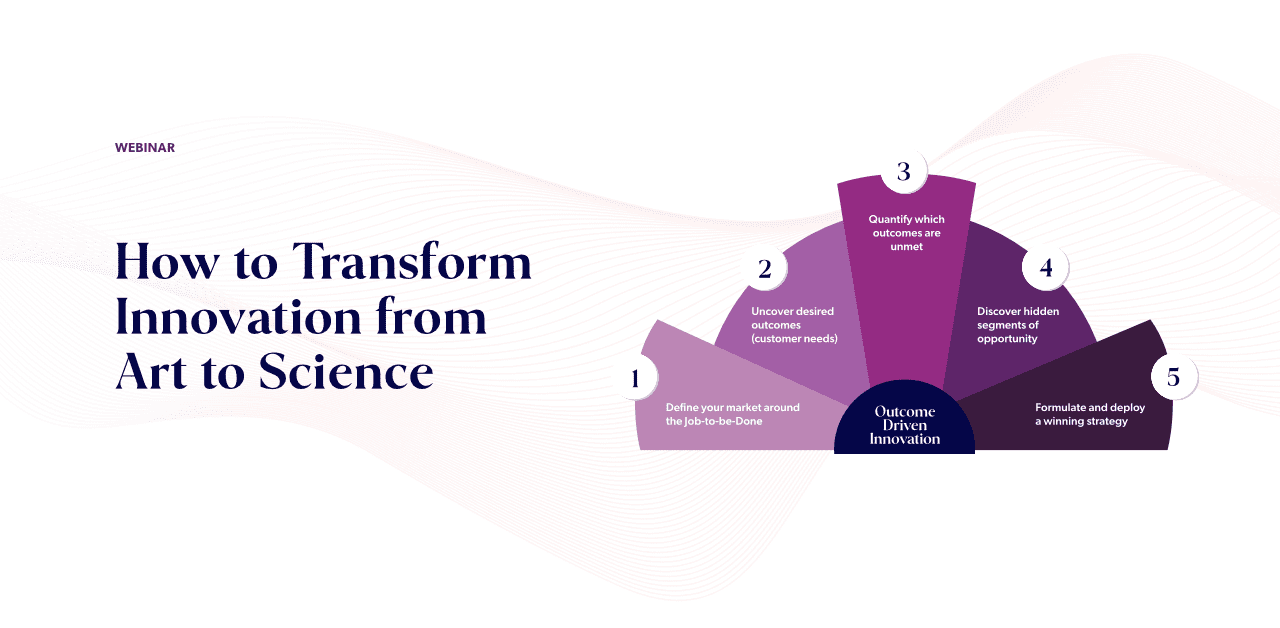
To build this competency, your company must employ a customer-centric research process that enables the collection of unique customer insights needed to drive value creation. Strategyn’s Outcome-Driven Innovation (ODI) research process provides these insights. When using these insights, companies have a product innovation success rate of 86 percent – five times the industry average.
Three-Phase Approach to Building a Customer-Centric Culture
Building a customer-centric culture of innovation is best accomplished in three phases:
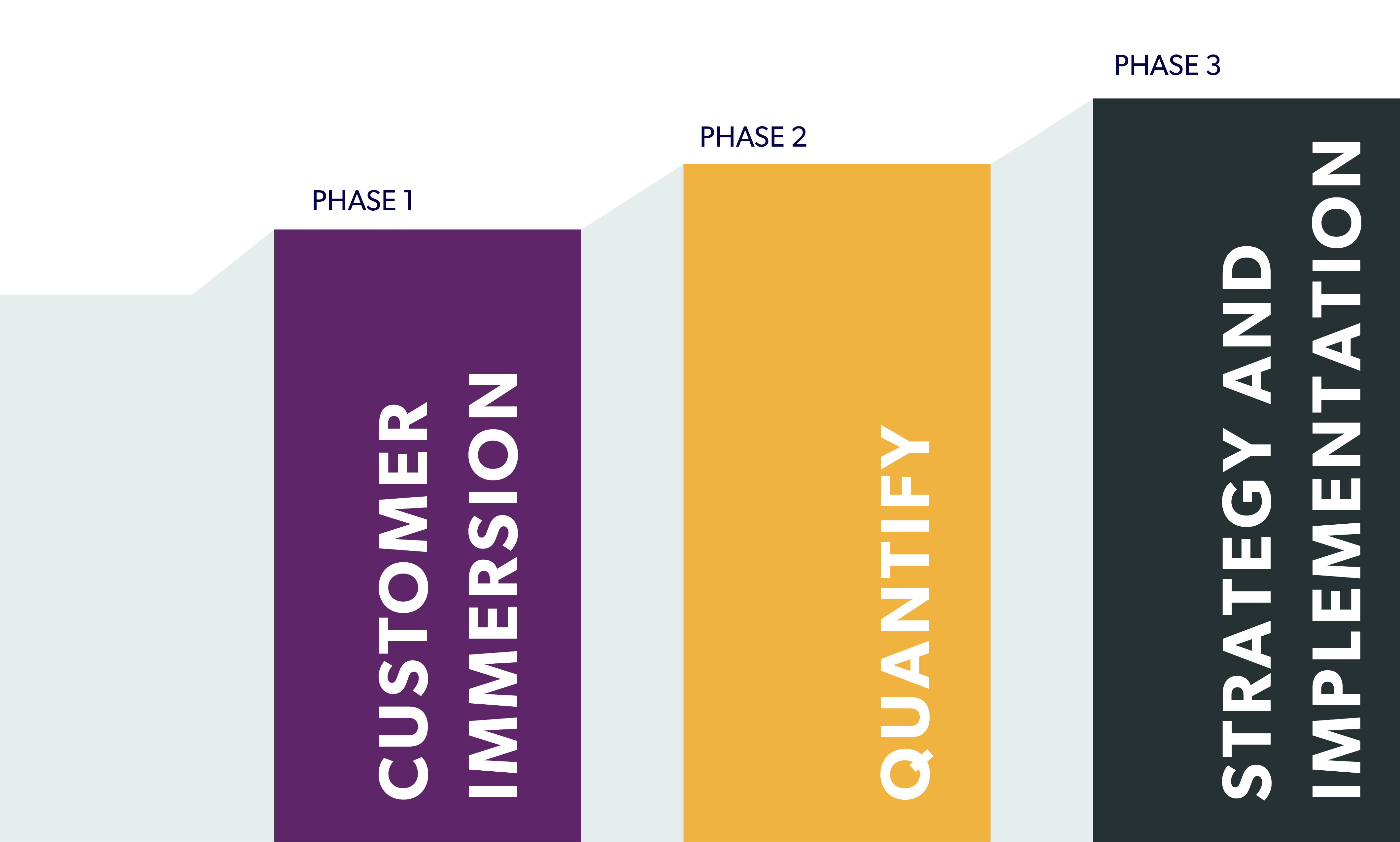
Phase I: Customer Immersion Workshop
Each cross-functional product team participates in an intensive one-day workshop, engaging in a unique customer journey. They see their market through a “jobs-to-be-done” lens and learn what customer insights they need to drive customer-centric decision making. They walk away with valuable customer insights derived from ODI-based qualitative research.
Phase II: Quantitative Research and Data Model Building
We conduct ODI-based quantitative research to prioritize customer information needed to build the customer-centric data model. This data set enables the company to make customer-centric business decisions for years to come.
Phase III: Strategy Formulation and Implementation
We teach managers and employees across the organization how to use these insights to formulate market and product strategies and to drive customer-centric growth.
This three-phase approach provides a comprehensive framework for transforming a company’s culture and approach to innovation, ensuring a focus on creating value for customers.
Dive Deeper into Customer-Centric Innovation
While this blog post offers a high-level overview of our approach to building a customer-centric culture of innovation, there’s so much more to explore.
To gain a deeper understanding of each phase, including detailed strategies, real-world examples, and practical implementation tips, we invite you to read our full whitepaper, “Blueprint for Building a Customer-Centric Culture of Innovation.”