
Free Innovation Assessment: Improve your organization's innovation outcomes
Take Innovation Assessment Take Innovation Assessment

Make Your Innovation Process 5X More Effective

Hosted by Tony Ulwick

Summary

Companies invest heavily in innovation in today’s competitive landscape to stay ahead. However, many organizations face inefficiencies throughout innovation, leading to low success rates and wasted resources. The goal is to turn around these failure rates and increase success rates to an impressive 86%. This blog post will delve into the potential of the Outcome-Driven Innovation (ODI) process, offering hope for organizations looking to improve their innovation success rates.  

Defining the Innovation Process

  Innovation is devising solutions that address unmet customer needs. Ideally, the output of an effective innovation process is a product concept that will win in the market before development even begins. This shift in thinking is crucial for improving success rates and minimizing wasted efforts.  

Shifting to a Needs-First Approach 

  Traditionally, companies have followed an “Ideas-First” approach, often leading to inefficiencies and low success rates. By adopting a “Needs-First” approach, organizations can focus on understanding customer needs and targeting solutions to address unmet needs. This shift in perspective is the foundation for improving innovation outcomes.  

Misalignment on Key Terms and Issues

   One of the primary reasons for low innovation success rates is the lack of agreement on key terms and issues. Teams often struggle to align on defining markets and needs, uncovering unmet needs, and segmenting markets. This misalignment leads to combining incompatible innovation methods and, ultimately, poor results.  

Characteristics of a Great Innovation Process

   A great innovation process should provide a unifying language of innovation, deliver high success rates (86%), align teams around value creation, and enable conceptualizing winning solutions before development begins. By incorporating these characteristics, organizations can dramatically improve their innovation efforts.  

Outcome-Driven Innovation (ODI) Process 

  The ODI process is a powerful approach that addresses the challenges mentioned above. It begins by defining markets around the “job-to-be-done,” which focuses on the customer’s objectives rather than solutions. Next, customer needs are identified as measurable outcomes, allowing teams to quantify unmet needs through importance vs. satisfaction ratings. ODI also segments markets around unmet needs rather than just demographics, providing a more accurate picture of customer requirements. Finally, the innovation strategy is aligned with unmet needs for efficient growth.  

Benefits and Results of ODI 

  Organizations that have implemented the ODI process have seen remarkable results, including:
  • 86% success rates, a 5x improvement over traditional methods
  • Reduced development expenses and time-to-market
  • Valid, defensible market segments
  • A roadmap for long-term growth
  • Improved team alignment and confidence in winning products
These benefits demonstrate the power of the ODI process in transforming innovation efforts and driving sustainable growth.  

Conclusion 

  The Outcome-Driven Innovation process provides a scientific approach to innovation that brings competence, transparency, alignment, and trust to teams. Companies of all sizes can dramatically improve their innovation success rates by focusing on customer needs and aligning innovation efforts accordingly. Adopting the ODI process is a proven way to create winning products and stay ahead in today’s competitive market.

Discussion Points

  • Why companies struggle with innovation
  • Creating a unifying language of innovation
  • The 5-step process for conceptualizing a product you know will win
Duration:
55
Minutes

Description

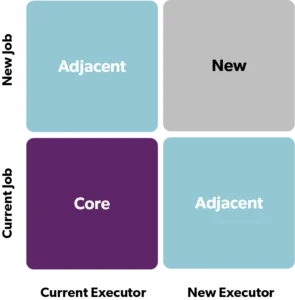
Are you a product leader looking to drive growth? Join us for our next webinar, where you’ll learn how to use jobs-to-be-done to identify and prioritize your biggest Market Strategy MatrixIn this session, we’ll cover: Defining Markets for Growth: Discover how defining markets through a jobs-to-be-done lens provides a consistent, stable foundation for identifying growth opportunities and aligning your organization around a shared understanding of your target markets. The Three Options for Growth: Explore a practical framework for efficiently expanding revenue by sequentially exploring opportunities to grow your core markets, expand into adjacent markets, and unlock entirely new markets. Techniques for Maximizing Core Market Growth: Gain actionable insights on how to drive growth in your core markets by identifying underserved job steps to get more of the job done, and pinpointing unmet customer needs to focus innovation efforts on getting the job done better. Whether you’re looking to maximize growth in your core markets, identify the most attractive adjacent opportunities, or unlock the potential of entirely new markets, this webinar will provide you with the tools and frameworks you need to succeed. Don’t miss this opportunity to learn how to apply jobs-to-be-done to accelerate revenue growth and take your product strategy to the next level. Register now and start unlocking your full growth potential.
Tony Ulwick