

The Innovation Process
A comprehensive guide: Definition, Steps, and Examples
To be great at innovation, you need a great innovation process.

What is the Innovation Process?
While many organizations treat innovation as an art driven by random ideation and luck, successful innovation requires a disciplined, data-driven approach that starts with deeply understanding what customers are trying to accomplish (their “job-to-be-done”) and what metrics they use to measure success.

Without these inputs, development teams must make critical design decisions based on assumptions or incomplete information.
But when armed with precise, quantified customer needs data, development teams can make informed trade-off decisions, prioritize features appropriately, and validate that their solutions will meaningfully address customer needs before significant resources are invested.
With a structured innovation process, companies can avoid failure rates of over 80% in new product development.
By following a rigorous process rather than relying on gut feel or guesswork, organizations can conceptualize products and services that they know, with a high degree of confidence, will win the marketplace—BEFORE development even begins.
The process provides the framework, tools, and methods needed to consistently create value for customers while reducing the risks and costs of failed initiatives.
Why companies struggle with innovation
Product teams struggle because:
- They disagree on who their customers are
- They disagree on what a customer “need” is, (e.g., what type of input brings predictability to the innovation process, etc.)
- They fail to capture all the customer’s needs and instead consider only a small subset, thus leading to incremental improvement at best
- They fail to quantitatively determine which needs are unmet—and by how much
- They fail to discover and accommodate segments of customers with different unmet needs
- They lack the criteria needed to effectively evaluate a product concept
An effective innovation process must overcome all these obstacles. A company must know all the customer’s needs and determine which are unmet before idea generation begins and ideas are collected and evaluated.
Understanding the Innovation Methodologies
Design Thinking focuses on building deep customer empathy and creative problem-solving through a five-step process: empathize, define, ideate, prototype, and test. While excellent at generating creative solutions and building customer understanding, insights can sometimes be subjective and solutions may not always be feasible.
Lean Startup emphasizes rapid experimentation and learning through building minimum viable products (MVPs) and gathering market feedback. This methodology helps minimize waste and validate ideas quickly, though it may not be as effective at generating breakthrough innovations.
Agile/Scrum structures innovation into short development cycles called sprints, promoting frequent delivery and adaptation based on feedback. While great for improving team collaboration and maintaining development momentum, it can be challenging to implement in large organizations and may sometimes lack deep customer insight.
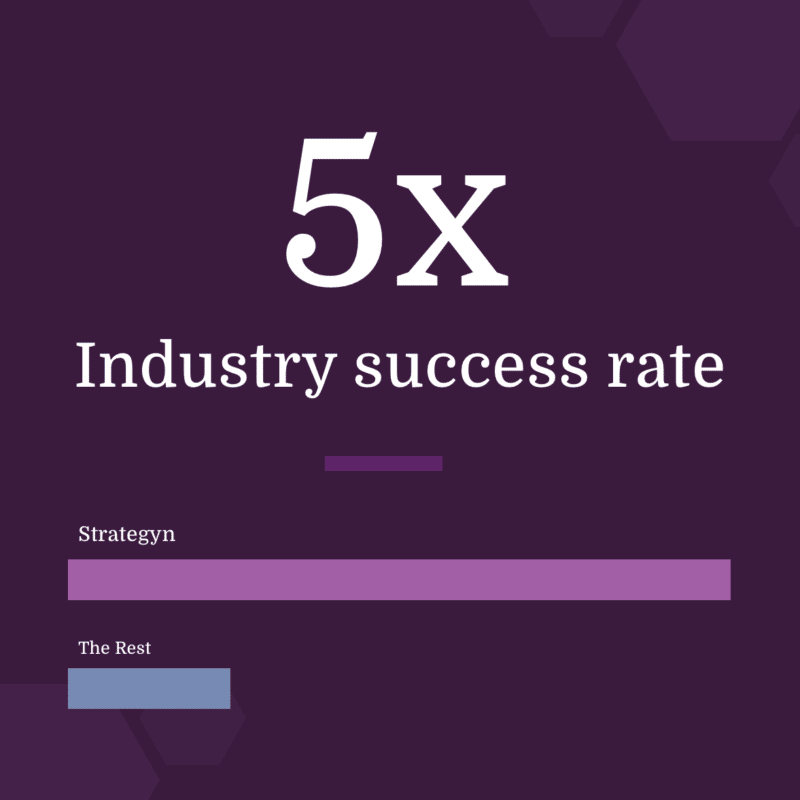
Outcome-Driven Innovation (ODI) provides a systematic, data-driven approach to understanding and addressing customer needs. Unlike traditional innovation methods that rely heavily on subjective insights or random ideation, ODI helps organizations precisely define what customers are trying to accomplish (their “jobs-to-be-done”) and what metrics they use to measure success. This rigorous methodology has proven remarkably effective, achieving an 86% success rate in new product development—five times the industry average.
Open Innovation/Crowdsourcing leverages external expertise and collaboration to generate and develop ideas. While this approach can bring in diverse perspectives and expertise, managing large volumes of contributions can be challenging.
Many organizations succeed by thoughtfully combining multiple methodologies to leverage their complementary strengths.
For example, ODI can be used to identify opportunities, design thinking can be used to generate solutions, and lean startup can be used to validate concepts. The key is selecting and integrating approaches that align with your organization’s goals, capabilities, and culture.
If you’re interested in learning more about different innovation methodologies, we’ve created this guide.
The world’s leading innovation process
Outcome-Driven Innovation
Results from Customer Alignment
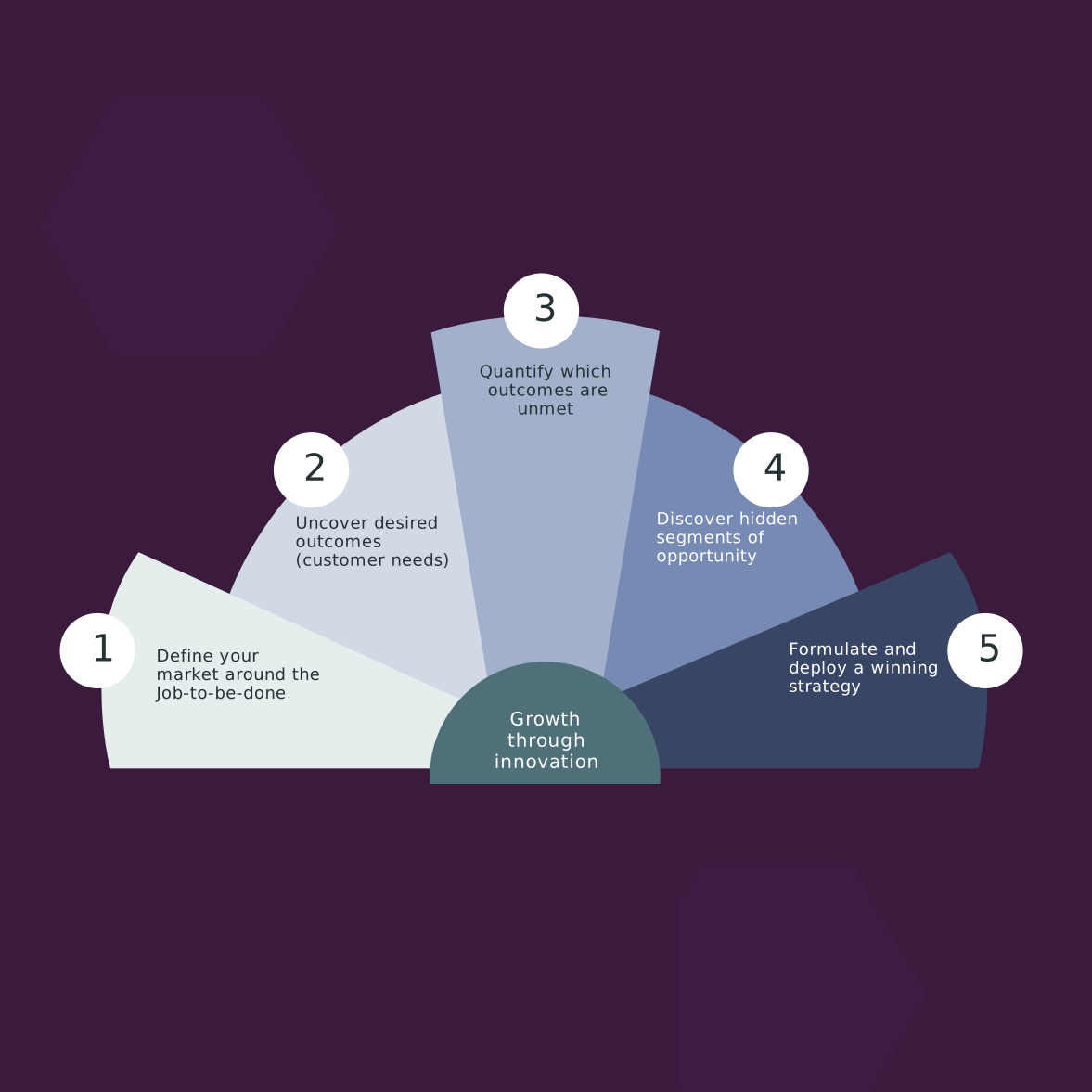
5 steps of the Outcome-Driven Innovation process

1. Define your market around the job-to-be-done
People buy products and services to get a job done. Defining your market around this job-to-be-done gives your company a stable focal point around which to align and orchestrate value creation.
This step includes:
- Defining customers differently. Get to know your true customer—the job executor
- Defining the market around the job. The JTBD must be defined at the right level of abstraction.
2. Uncover desired outcomes
Customers want to get their jobs done perfectly. The 100+ metrics customers use to measure the successful execution of a job-to-be-done define what perfection means—and instruct your company how to deliver it.
This innovation process step includes:
- Understanding all of your customer’s needs. It’s possible when you define customer needs as desired outcomes.
3. Quantify which outcomes are unmet
Customers have underserved and overserved needs. Knowing with statistical certainty which needs should be the focus of your value creation and cost reduction ensures the efficient deployment of resources.
This step includes:
- Understanding where customers need help most. Determine if your markets are under or overserved and precisely which outcomes hold the key to your growth.
4. Discover hidden segments of opportunity
Customers rarely agree on which needs are unmet. Segmenting your markets into groups of people with unique sets of unmet needs allows you to pursue opportunities your competitors will fail to see.
This process step includes:
- Segmenting the market around outcomes. People struggle differently when executing the job-to-be-done.
5. Formulate and deploy a winning strategy
With a common understanding of the customer’s unmet needs, your company is able to better position and improve existing products, identify and fill gaps in your portfolio, make impactful R&D investment decisions, and more.
In other words, you have everything you need to develop a reliable innovation strategy.
Give your team the inputs they need to win
Pursue your big idea with confidence
The goal of the ideation process should not be lots of ideas and idea generation activities. Instead, the goal should be to construct the single, best solution to satisfy the unmet customer needs of the target customers and segments, enabling them to get the job done faster, more conveniently, and more effectively than ever before.
There is one belief that permeates academic literature and has influenced nearly all gated product development processes: it is the notion that the innovation process begins with an idea. This is the myth that misleads. An idea is the output of the innovation process, not the starting point. Making ideation and idea management the starting point of the innovation process, although common, turns innovation into a guessing game. It is the most inefficient approach to innovation and the root cause of low innovation success rates.
Learn how to Pursue your big idea with confidence.
Quantify where competitors’ products fall short
Competitive analysis, when seen through a jobs-to-be-done lens, is not about head-to-head comparisons. Instead, it’s about assessing how much better or worse a product is at helping the customer get a job done.
Traditional competitive analysis almost always involves a technical comparison of product specifications and features, yet the analysis is conducted without knowing how customers measure value or how much value competing features deliver to the customer. This is the problem, and the myth that misleads: companies are not competing against other companies or their products. They are competing for the customers, and their one goal is to create value for them. And there is only one way to do that: by offering a product or service that is better than any other at helping them get their jobs done.
Learn how to leapfrog the competition.
Test your concept with confidence
Through a jobs-to-be-done lens, the goal of the concept testing process is to validate that a product concept is better than competing solutions at helping customers get a job done. To make this determination, we must know what metrics the customers use to measure the successful execution of the job-to-be-done. Our methods work because they are built around these customer metrics.
Be confident that your product will win in the market.
Position your product perfectly with customers
The goal of product positioning is to present a product or service to the customer in a way that effectively communicates its value. When looking at the product positioning process through a jobs-to-be-done lens, we see that the best way to communicate value to customers is to explain (1) how the product helps them execute the functional job better than competing solutions and (2) how it satisfies the emotional jobs that are associated with getting the functional job done.
Learn to Communicate function and appeal to emotion.
Size your market and Invest in high-growth markets
The size of a market can be calculated based on the number of potential job executors, the frequency with which they execute the job, and their willingness to pay to get the job done better. An attractive market consists of a large number of underserved executors who have a high willingness to pay to get the job done better. This forms an effective market sizing calculation.
Companies often size the market they are interested in by determining the dollar volume of the products being sold. Using that calculation, they decide to invest or divest in a market based on trends in revenue growth.
But here is the problem, and the myth. A product is not a market. Every product will one day become a thing of the past. Vinyl records and cassettes gave way to CDs and MP3s, but in time those formats too will fade. But just because a technology or a product becomes obsolete doesn’t mean the market disappeared. It means that the market (the people who hired the product to get a job done) moved on to buy another product; one that helped them get the job done better.
Learn how you can invest in high-growth markets.
Frequently Asked Questions
Most innovation processes fail because they start with ideas rather than customer needs. This approach, generating large volumes of ideas and filtering out the bad ones, is called the ideas-first approach, and it is the root cause of the industry’s persistently high failure rate of roughly 83%.
There are three structural reasons why it cannot work. First, generating more ideas does not improve the probability of finding the right one. In any given market, customers have 50 to 150 distinct needs, and anywhere from 5 to 80 percent of those needs may be unmet. Without knowing what those needs are, teams are brainstorming without a target. The mathematical probability of randomly generating a solution that addresses all unmet customer needs approaches zero.
Second, the evaluation and filtering process is equally flawed. Concepts are screened using intuition, conjoint analysis, or focus groups, all of which ask customers to evaluate solutions against needs that have never been explicitly defined. This is why companies using the ideas-first approach consistently achieve success rates of only 10 to 20 percent.
Third, customers cannot reliably articulate the solutions they want. They are not product designers or engineers. Their job is to get something done. The company’s job is to discover what that job is, what metrics customers use to measure success, and which of those metrics are underserved. That is the structural foundation of the needs-first approach to innovation, which Outcome-Driven Innovation (ODI) executes with an 86% success rate.
The difference is the starting point, and that starting point determines whether innovation is predictable or a guessing game.
The ideas-first approach begins with idea generation through brainstorming, open innovation programs, or phase-gate development. Ideas are collected, filtered, and tested. The assumption is that testing more ideas faster will surface a winner. It does not, because teams are evaluating solutions against customer needs that have never been formally defined. Without knowing all the customer’s needs and which are unmet, there is no reliable way to determine whether any given idea is actually the right one.
The needs-first approach begins by identifying all the customer’s needs before any solution is considered. It then quantifies which of those needs are underserved, and only then moves to ideation, targeting solutions directly at the unmet outcomes. Because the target is defined before the shot is taken, the results are predictable.
The critical distinction is execution. Most companies that attempt a needs-first approach still fail because they capture only a small subset of customer needs using qualitative research alone, never quantify which needs are unmet, and never discover hidden customer segments with different unmet needs. They end up guessing anyway.
Outcome-Driven Innovation (ODI) corrects this flaw. ODI captures all customer needs using the Jobs-to-be-Done Needs Framework, quantifies importance and satisfaction across a statistically valid population, and uses outcome-based segmentation to discover hidden groups of customers with unique unmet needs. The result is a complete, quantified picture of the market that makes ideation targeted and innovation predictable.
Outcome-Driven Innovation (ODI) is a six-step strategy and innovation process created by Tony Ulwick at Strategyn. Each step builds on the previous to produce a complete, data-driven innovation strategy before product development begins.
Define the market around the job-to-be-done. A market is defined as a group of people plus the core functional job they are trying to get done. This definition is stable over time, even as products and technologies change, making it a reliable foundation for long-term strategic investment.
Uncover the customer’s desired outcomes. Using qualitative research and the Universal Job Map, ODI practitioners capture all the metrics customers use to measure success when executing the job. These are called desired outcomes. A single market typically yields 50 to 150 desired outcome statements, each solution-free, measurable, and stable over time.
Quantify which outcomes are underserved or overserved. A survey is administered to a statistically valid sample of customers, typically 180 to 3,000 respondents. Each desired outcome is rated for importance and satisfaction. The Opportunity Algorithm then calculates which outcomes represent the greatest opportunities for growth.
Discover hidden segments of opportunity. Outcome-based segmentation identifies groups of customers with unique sets of unmet needs. These segments cannot be found through demographics, psychographics, or behavioral data. Each segment reveals a distinct opportunity with a distinct value proposition.
Align existing products with market opportunities. Before pursuing new development, companies use the insights to determine which existing products best address which customer segments, update messaging around underserved outcomes, and identify competitive weaknesses to address.
Conceptualize new products to address unmet needs. With a complete picture of which outcomes are underserved in which segments, teams can conceptualize products with precision. Rather than generating hundreds of ideas and guessing which will win, ideation targets the specific unmet outcomes of the target segment. A winning product concept can be constructed in days or hours once the target is known.
An innovation process with an 86% success rate, compared to an industry average of 17%, is the clearest measure of whether a process is working. That is the independently verified track record of Outcome-Driven Innovation (ODI) across 43 Strategyn client companies. Of 21 product launches that used ODI, 18 were rated successful by the sponsoring companies. The industry average, drawn from 12 independent sources including Harvard Business Review, PricewaterhouseCoopers, and Frost and Sullivan, is approximately 17%.
At the process level, success is measured by whether the innovation process produces the inputs needed to make confident decisions before development begins. A well-functioning innovation process should be able to answer ten questions with data: Who is the customer? What job are they trying to get done? What are all their desired outcomes? Which outcomes are underserved and by how much? Do segments exist with different unmet needs? What unmet outcomes exist in each segment? Which segments and outcomes should be targeted? How should the value proposition be defined? How should existing and pipeline products be positioned? What new products must be created?
If a company cannot answer these questions with quantitative confidence, its innovation process is not producing the inputs required for predictable success. ODI is designed specifically to answer all of them before a single line of product code is written or a dollar of development budget is committed.
Building a repeatable innovation process requires a structural shift in how the company defines customers, captures needs, and makes product decisions, not just a training program.
The practical starting point is one trained ODI practitioner per business unit. Strategyn’s online ODI certification can be completed in a few weeks, and narrowly scoped projects can be completed in as little as four weeks in a project sprint. The cross-functional team that works with the practitioner typically includes marketing, sales, planning, engineering, and R&D. These team members do not need full certification, but completing an ODI course ensures the insights are applied correctly.
For larger organizations, the recommended model is an Innovation Center of Excellence staffed by internal ODI practitioners. Strategyn has found that Six Sigma certified practitioners with qualitative and quantitative market research experience are particularly well suited to the role, given the process rigor and analytical demands of ODI.
Organizational transformation follows three phases. In Phase I, a cross-functional team participates in a workshop using qualitative research to surface the customer’s job-to-be-done and desired outcomes. Most teams see their market through a Jobs-to-be-Done lens for the first time. In Phase II, ODI practitioners lead quantitative research to identify which outcomes are underserved and which hidden customer segments have unique unmet needs. In Phase III, those insights drive market strategy, product strategy, messaging, and resource allocation.
The compounding benefit of this approach is organizational alignment. When all teams operate from the same definition of a customer, the same definition of a need, and the same set of customer-defined performance metrics, decision-making across marketing, product, and R&D becomes coordinated, efficient, and focused on what actually drives growth.

Tony Ulwick
Tony is the pioneer of Jobs-to-be-Done Theory, inventor of the Outcome-Driven Innovation® (ODI) process, and founder and CEO of Strategyn. Philip Kotler calls Tony “the Deming of innovation,” and Clayton Christensen credits him with “bringing predictability to innovation.” Published in Harvard Business Review and MIT Sloan Management Review, Tony is also the author of 2 best sellers: What Customers Want and JOBS TO BE DONE: Theory to Practice.
Best-Selling Book