

Innovation Assessment Research – fINDING 03
Understanding customer needs is the goal of innovation. It’s also the most misunderstood.
Most organizations are doing customer research. The problem isn’t effort. It’s framing.
393 innovation leaders helped us prove it.
Table of Contents
Only 15% of innovation leaders say they understand their customers’ needs well.
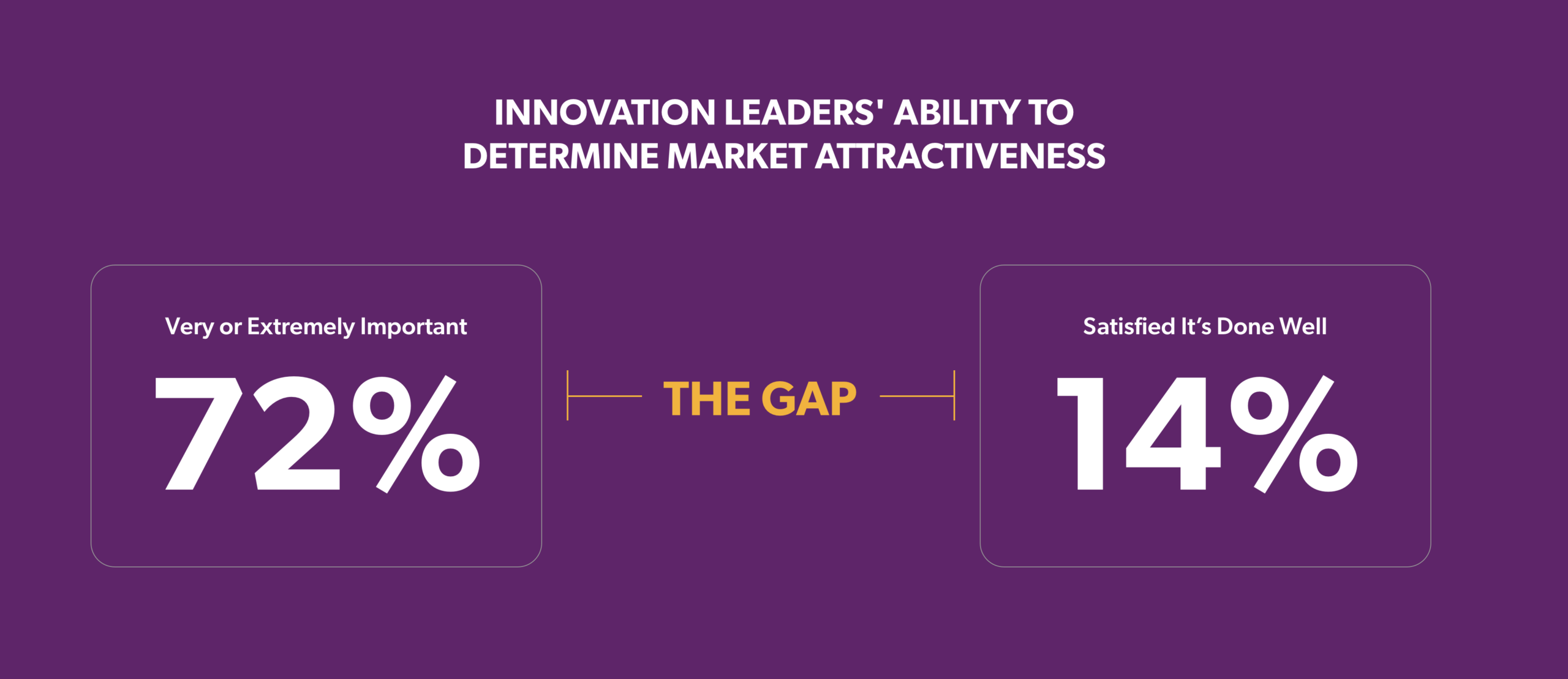
The result is that product, marketing, and strategy end up working from their own version of what customers want. The organization isn’t aligned around customer needs. It’s aligned around competing interpretations of them. Investments get made based on whoever argues loudest rather than on data. Solutions get built for the symptom rather than the cause.
This is not a research problem. It is a framing problem. And it starts earlier than most teams realize.
Four reasons customer research misses the mark
-
15 %satisfied with how precisely they define customer needs
Your team isn’t working from the same definition of customer needs
In most organizations, needs get captured differently by different people: requirements specs, user stories, support transcripts, executive recollections from last quarter’s customer call. Each is an honest attempt. By the time product, marketing, and engineering sit down together, they’re working from different versions of the same thing. The result looks like alignment. It isn’t.
-
17 %satisfied capturing a complete set of customer needs
Your research only finds the needs your current product already addresses
The set of needs your research finds is bounded by the frame it brings. Research organized around an existing solution finds what that solution already addresses. The needs that fall outside its scope stay invisible. Until a competitor finds them.
-
17 %satisfied identifying the root causes of unmet needs
You’re solving the symptom, not the cause
Teams are often skilled at solving problems once a clear target exists. The failure is in the targeting. When a need is identified without understanding why it’s unmet, the solution addresses the surface. The underlying cause stays intact and resurfaces in the next product cycle, attributed once again to execution.
-
15 %satisfied knowing which customer needs are most unmet
You’re prioritizing the loudest needs, not the most unmet ones
Knowing what customers need is different from knowing which of those needs are most worth solving. Without a quantitative way to measure unmet need across the full market, priority defaults to whoever argues loudest: the most vocal customers, the most persuasive executive, the strongest interpretation of qualitative data. Teams build for what they heard about most, not what represents the greatest opportunity.
Why research anchored to your product can’t see beyond it
Research framed around your solution can only find what it already addresses
| Customer needs captured in solution language Blurred Picture | Customer needs captured using outcome language Sharp Picture |
|---|---|
 | 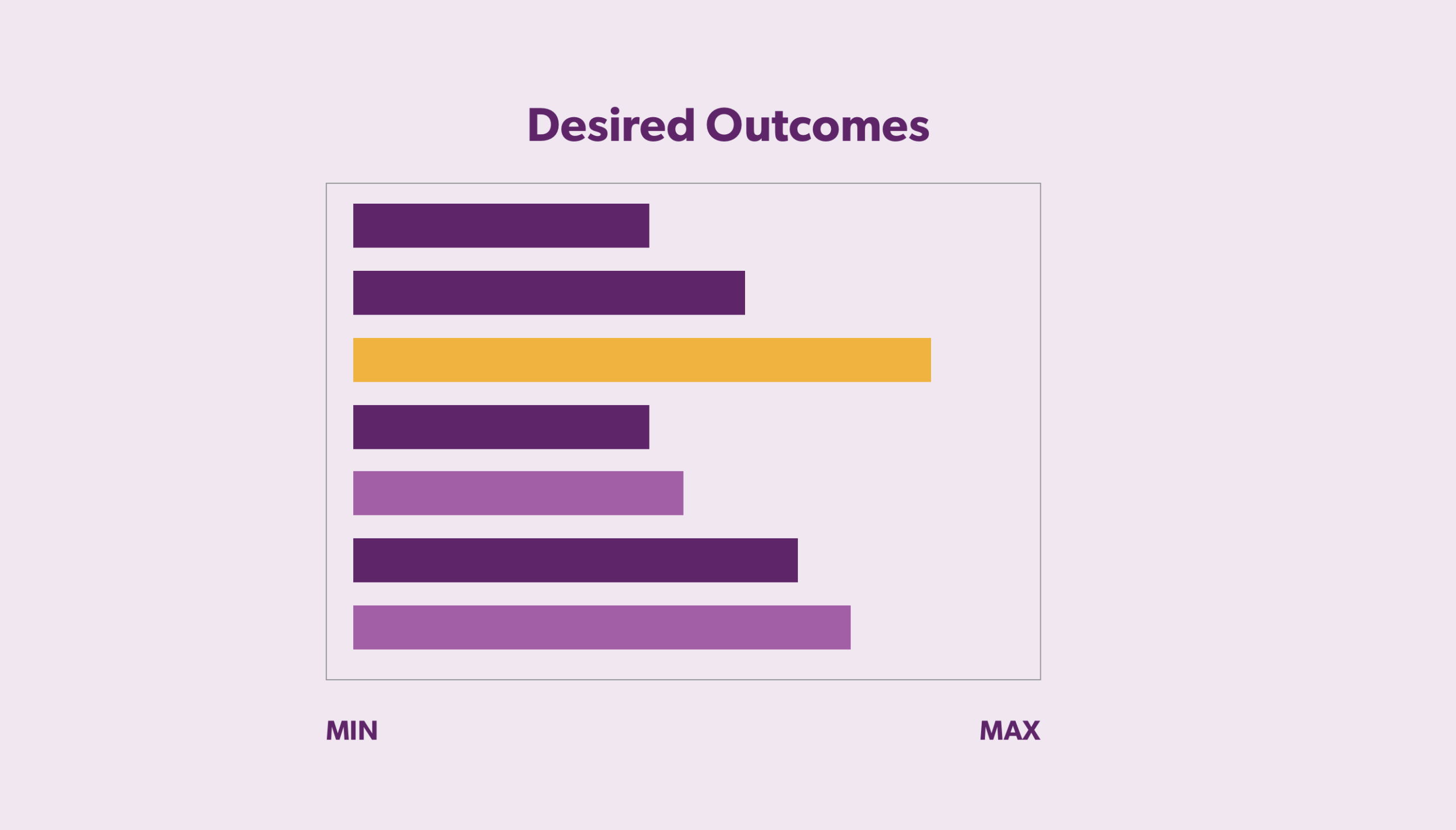 |
| Capture what customer “say” they want | Capture what customers are trying to achieve. |
| Surface product complaints and feature requests. | Surface measurable results, independent of any solution. |
| Anchor to the solutions that customers can imagine today. | Anchor to customer outcomes that won’t change when the technology does. |
| Every interpretation is defensible. Non is decisive. | Every need is stable over time and quantifiable. |
This is the methodological difference at the center of Outcome-Driven Innovation® (ODI®). Define the research question around the Job, not the solution. The research then surfaces Desired Outcomes: measurable statements of what customers are trying to accomplish, independent of any specific product. What becomes visible changes. What becomes possible to build changes with it.
If your team is already using a Jobs-to-be-Done approach, the question worth asking is whether it produces a quantitative Opportunity Score (a ranked view of which outcomes are most unmet across the full market) or qualitative insight. Both are useful. Only one produces the priority ranking an investment decision requires.
How ODI defines customer needs: the methodology behind Desired Outcomes and Opportunity Scores
Microsoft Case Study
Microsoft: A declining business doubled its revenue
Strategyn reframed it: what are IT decision-makers trying to accomplish when managing software assets across an enterprise?
A declining business 2X its year-over-year revenue.
Dave Wascha, Director
What becomes possible when needs are defined correctly
What getting customer needs right makes possible
-
Internal Alignment
Teams stop debating what to build.
When everyone means the same thing when they write down a customer need, the competing-interpretations problem dissolves. Product, marketing, and engineering work from the same picture.
-
Complete Coverage
Competitors stop beating you to the things you missed.
When research is framed around the Job, the set of needs it surfaces is complete. Nothing stays invisible because it lives outside the boundary of what you already offer.
-
Quantitative priority
Investment goes to the right problems.
Knowing which needs are most unmet, across the full market and not just among the loudest customers, turns roadmap decisions from political to analytical. The Opportunity Score replaces the persuasive argument.
-
Durable solutions
The solutions you ship last.
When you understand why a need is unmet, the fix addresses the cause. The same problem doesn’t resurface in the next cycle.
— Philip Kotler, Kellogg School of Management, Northwestern University
Innovation Assessment
Find out if customer needs definition is your biggest gap
The Innovation Assessment measures exactly that. It evaluates where your organization’s innovation process is strongest and where it’s most at risk, across all five stages from strategic direction to market impact.
Free. 10 minutes. Personal score.
FAQ’s
In innovation, a customer need is the measurable outcome a customer is trying to achieve when performing a Job — not a feature request or product preference. Outcome-Driven Innovation® (ODI®) defines customer needs as Desired Outcomes: stable, quantifiable statements of what customers want to accomplish, independent of any specific solution. This definition matters because it determines what research can find. Needs defined as product preferences shift every product cycle. Needs defined as Desired Outcomes remain stable for decades, and can be surveyed, scored, and prioritized with the same rigor as any other business metric.
71% of innovation leaders rate understanding customer needs as very or extremely important. Only 15% say they do it well. That gap explains most product failures. When needs are imprecisely defined, teams work from competing interpretations rather than a shared picture. Investment decisions get made based on whoever argues loudest. Products get built for the symptom rather than the cause. Understanding customer needs is not one research activity among many — it is the foundation that every downstream innovation decision depends on. Get it wrong and execution inherits the cost.
Customer wants are solution preferences: features, products, or services customers say they’d like. Customer needs are the outcomes customers are trying to achieve, regardless of what solutions exist. Wants shift as markets evolve. Needs are stable. Asking customers what they want produces a wishlist bounded by what they already know exists. Asking what they’re trying to accomplish — the Job-to-be-Done — surfaces the complete set of needs, including those no current solution addresses. The distinction determines what research can find, and what products can be built.
The key is framing research around the Job-to-be-Done rather than the current solution. Most customer research asks what customers think of the product — which produces opinions about what already exists. ODI instead asks what customers are trying to accomplish across the full scope of the Job, independent of any solution. The outputs are Desired Outcomes: structured, measurable statements that can be surveyed at scale. Quantifying which outcomes are most unmet produces an Opportunity Score — a ranked view of where the greatest growth potential lies. This turns a judgment call into a data-driven priority.
Most customer research is framed around the current solution. It asks what customers think of the product, what features they want, what they would change. That frame produces answers about what already exists. The needs that fall outside the current offering — the ones that often represent the greatest growth opportunity — stay invisible. Research framed around the Job-to-be-Done finds the complete picture: every outcome customers are trying to achieve, whether the current product addresses it or not. The frame the research uses determines what it can find. And what it cannot find never gets built.