

Innovation Assessment Research – fINDING 04
The customer segments your demographic data will never show you
Most segmentation is organized around how the sales org is structured. Not around where the opportunity actually lives.
Table of Contents
Only 13% of leaders say they do customer segmentation well
Why demographic segmentation misses the market
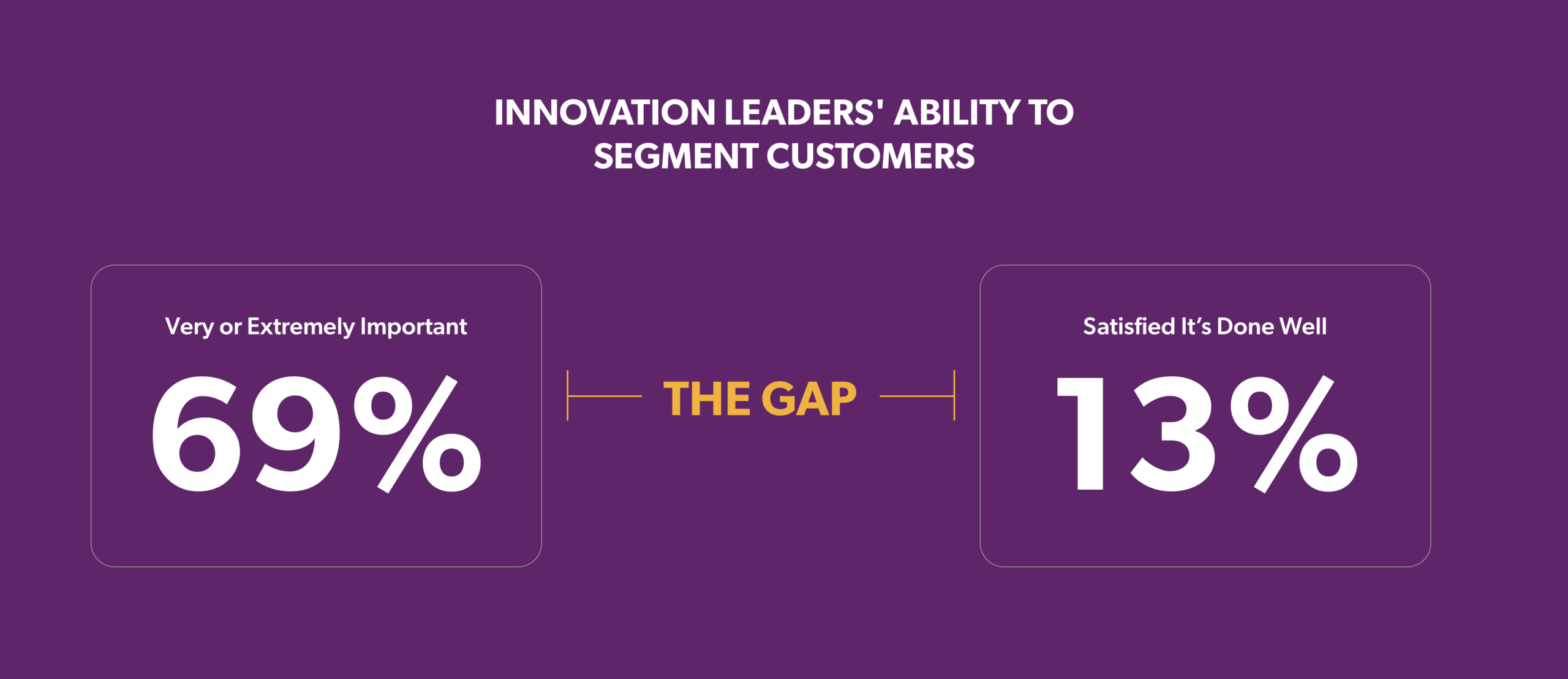
The gap between those two numbers points to a structural problem with how segmentation is traditionally done.
Traditional segmentation groups customers by demographics: personas, industry verticals, company size, geography, and firmographic tiers. The structure maps neatly onto how the sales org is organized and how industry analysts carve up markets.
The logic is familiar: customers who share demographic characteristics also share needs. Same industry, same problems. Same company size, same priorities. Same geography, same motivations.
It doesn’t. Two people can look identical on paper and need completely different products. Two people who look nothing alike can need exactly the same one.
Consider two customers traditional segmentation would treat as one

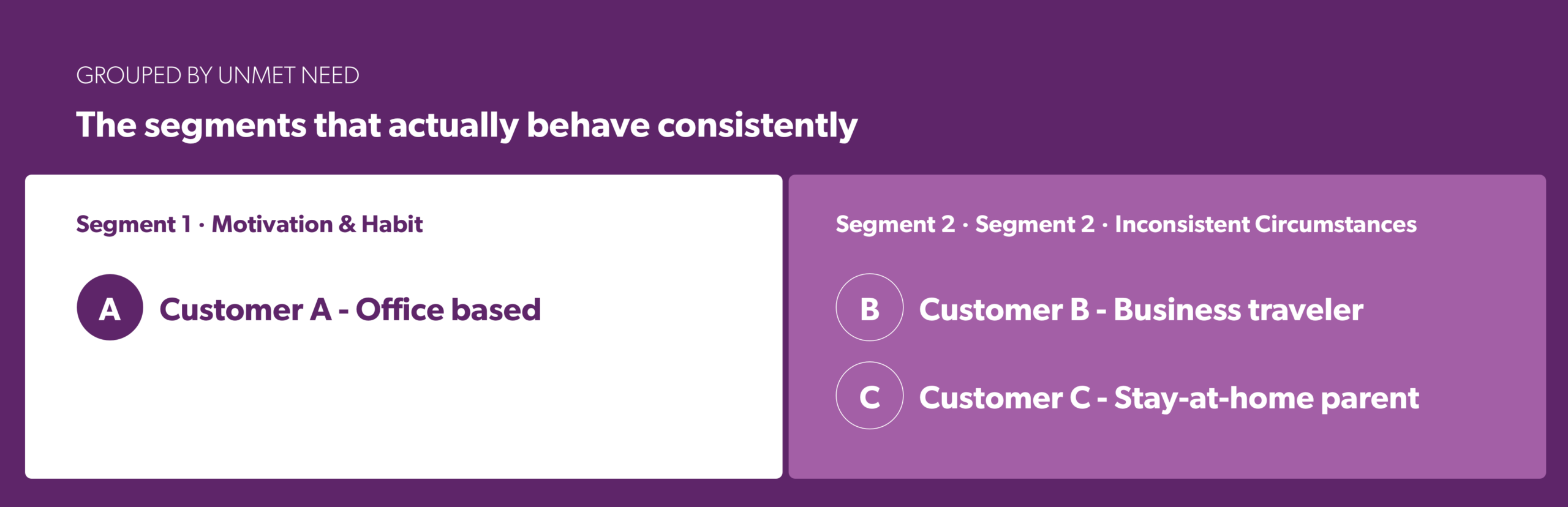
Now put that road warrior next to a stay-at-home parent who can never predict when she’ll have a free thirty minutes. She looks nothing like him demographically. But they share the exact same core struggle: how do you exercise consistently when your circumstances keep changing? They are, in every way that matters to a product decision, the same customer. A demographic report would never put them in the same segment.
The same pattern plays out in B2B markets every day.
Two companies in the same industry, at the same company size, in the same geography, can have entirely different unmet needs depending on the Job they’re trying to get done. And two companies that look nothing alike on paper can share the exact same unmet needs because they’re executing the same Job under the same difficult circumstances. Demographic segmentation imposes a familiar structure on the market, but it doesn’t reflect how the market actually works.
The phantom target problem
Phantom targets: what demographic segmentation actually produces
When a product is built to serve a demographic segment, it’s built for an average of the needs inside that segment, because the segment was never defined around needs in the first place. The result is a product that partially addresses what many customers need and precisely addresses what none of them need. Messaging built for the same phantom target lands with the same imprecision.
A phantom target isn’t a targeting mistake you can fix with better copy or sharper targeting. It’s a structural problem. The segment was never real. It was a convenient classification that mapped to the sales org, the industry report, or the competitive set. Not to how opportunity is actually distributed in the market.
It’s also why so many customer personas feel accurate but underperform. A persona built on demographic averages inherits the same structural problem. Competitors eventually find the real segments. By then, you’ve been optimizing against the wrong map.
Case example: Motorola finds three hidden segments and grows 18%
Motorola: 18% revenue growth in a stagnant market through outcome-based segmentation
Three hidden segments became visible
-
40 %
Communicate privately and discreetly
Without being overheard. Retailers, security, hospitality.
-
28 %
Communicate clearly under pressure
In dangerous, even life-threatening situations. First responders, industrial sites.
-
32 %
Coordinate teams and manage tasks
Across groups, with administrative overhead. Logistics, field service, operations.
In a stagnant market
THE SOLUTION
What outcome-based segmentation makes possible
Measurable size
Segment attractiveness becomes precise.
Not by estimating category spend or counting companies in a vertical. By quantifying how many customers share a specific pattern of underserved need, and how acute that need is. The Opportunity Score tells you where the market is genuinely underserved and by how much. You can rank real segments, size them, and choose.
Product clarity
Products are built for one segment’s exact struggle, not an average of three.
When you know precisely which outcomes a segment is underserved on, the product strategy follows. You’re not hedging between competing requirements. You’re building for one segment’s specific problem and removing everything that doesn’t serve it. Messaging built on the same outcomes lands with the same precision.
The upstream dependency
The segments you can find depend on how you defined the market.
Outcome-based segmentation reveals what has always been there. But what you can see is shaped by the question you asked at the market-definition stage. Define the market around a Job-to-be-Done and the real segments surface. Define it around a product category and every segment downstream inherits the same blind spot.
Second, product, messaging, and go-to-market strategy become designable around a precise set of outcomes rather than a demographic average. The product isn’t optimized for the average of three different customers. It’s built for the one segment whose struggle it was designed to solve.
This is also where segmentation connects directly to how you defined your market in the first place. The segments you can see are shaped by the question you asked at the market-definition stage. Get the market definition wrong and every segment downstream is a phantom target before the segmentation work even begins. How market definition affects what you can find →
Innovation Assessment
Find out if your segmentation would reveal where your best opportunity lives
Most organizations aren’t lacking a segmentation strategy. They’re segmenting on criteria that feel logical but don’t reflect how opportunity is actually distributed across the market.
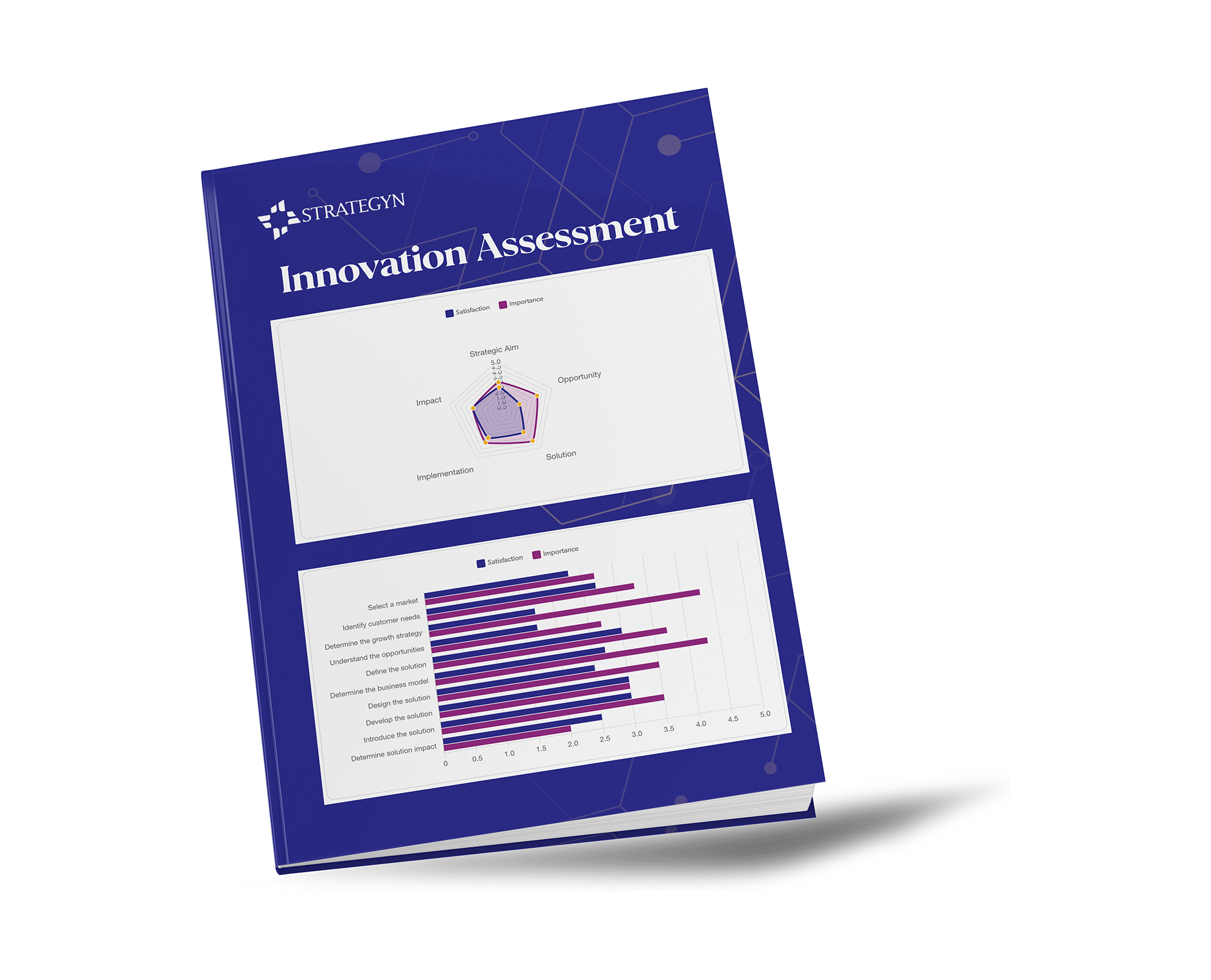
The Innovation Assessment measures how your current approach to segmentation, market definition, and customer needs stacks up against the ODI standard, and whether your process would ever reveal the segments where your real opportunity lives.
FAQ’s
Customer segmentation is the process of dividing a market into groups of customers who share similar characteristics. Most approaches use demographic criteria like industry, company size, or geography. Outcome-based segmentation divides customers by shared unmet needs on the same Jobs-to-be-Done, revealing groups that actually behave consistently and can be served with precision.
Most customer segmentation fails because it groups customers by demographic criteria (industry, company size, geography) that feel logical but don’t reflect how opportunity is distributed. Customers cluster around shared unmet needs, not shared demographics. Segments built this way produce phantom targets: groups that look real but don’t behave like them.
Outcome-based segmentation groups customers by the unmet needs they share on the same Jobs-to-be-Done, not by shared demographics. Pioneered through Outcome-Driven Innovation (ODI), it identifies segments that behave consistently because they share the same struggle, enabling products and messaging built for a precise set of needs rather than a demographic average.
Phantom targets are customer segments defined by demographic criteria that look like real groups but don’t behave like them. Because they’re built around shared demographics rather than shared unmet needs, products designed to serve them address an average of different struggles rather than solving a specific one.